Weather in Kelowna: What to Expect Year-Round
📖 Estimated reading time: 7 minutes
Weather in Kelowna: What to Expect Year-Round
If you're thinking about moving to Kelowna, the weather is probably part of the appeal.
We really do get four distinct seasons here — hot, dry summers, colourful falls, real winter weather and a spring that seems to change almost by the week.
But Kelowna's climate is a little more nuanced than the typical "sunny Okanagan" description.
Winters can be surprisingly grey in the valley. Summer temperatures commonly reach the 30s. Wildfire smoke is something worth understanding. And weather can feel noticeably different depending on whether you live close to the lake or higher up in one of Kelowna's hillside neighbourhoods.
Here's what you should realistically expect throughout the year.
If you're still researching the region more broadly, you can also start with my complete guide to moving to Kelowna.
☀️ Kelowna Weather at a Glance
Summer: Hot, dry and sunny, with daytime temperatures commonly reaching the 30s during July and August.
Fall: Warm September weather often gives way to a much cooler November.
Winter: Cooler and cloudier, with snow and icy conditions but generally milder temperatures than many inland Canadian cities.
Spring: A gradual warm-up from cool March weather into increasingly warm days by May.
Precipitation: Kelowna has a relatively dry climate, with much less rainfall than coastal BC. Summer is especially dry.
One important thing to know is that Kelowna's official climate station is located at Kelowna International Airport, which sits higher and farther from Okanagan Lake than Downtown Kelowna.
That means the official climate numbers don't always feel exactly like the weather you'll experience in every neighbourhood.
❄️ Winter in Kelowna
Kelowna definitely has winter.
From December through February, daytime temperatures often hover around freezing or a few degrees above it, while overnight temperatures commonly fall below zero.
Snow is part of winter here, particularly in December and January, but Kelowna generally receives less snow than many Prairie and eastern Canadian cities.
What surprises some newcomers isn't necessarily the temperature.
It's the cloud cover.
Kelowna can experience a winter temperature inversion, where low cloud settles into the valley and stays there for stretches of time.
So you may wake up to a grey, socked-in valley while the mountains above are sitting in sunshine.
It's one of those very Okanagan winter experiences that isn't obvious from looking at an average temperature chart.
What winter feels like depends on where you're moving from
If you're coming from Vancouver or the Lower Mainland, you'll probably notice more snow, colder overnight temperatures and more icy roads.
If you're coming from Calgary, Edmonton or much of eastern Canada, Kelowna winters may feel comparatively mild.
Either way, you still need to be prepared for real winter conditions.
I've covered winter tires, highway travel and mountain-pass driving separately in my Getting Around Kelowna guide, so I won't repeat all of that here.
🌷 Spring in Kelowna
Spring is a true transition season.
March can still feel cool, but by April and May the difference becomes noticeable. By May, daytime temperatures are often comfortably warm.
It's also one of those seasons when you can leave the house in a jacket in the morning and regret it by mid-afternoon. 😄
Spring is when hiking, biking, golf and patios start coming back into everyday life, although higher-elevation trails may still have snow well after the valley has warmed up.
☀️ Summer in Kelowna
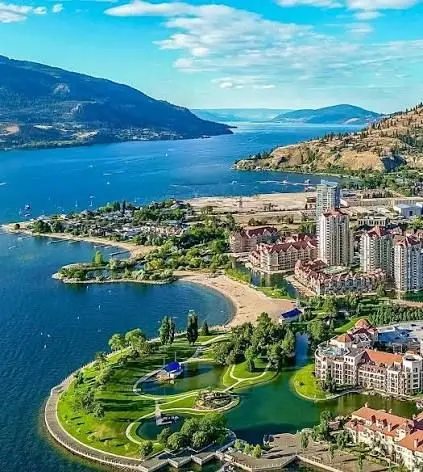
Summer is when Kelowna really feels like the Okanagan most people picture.
June through August is typically hot, dry and sunny. July and August are the warmest months, with temperatures commonly reaching the 30s and hotter stretches during heat waves.
The heat also tends to feel different from somewhere like Toronto because Kelowna summers are generally much drier.
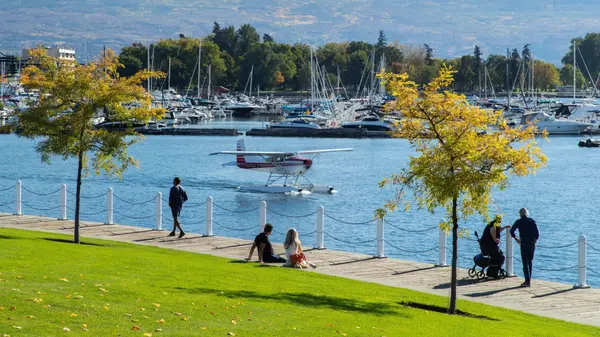
It's a big part of the Okanagan lifestyle — beach days, evenings outside, boating, golf, hiking and seemingly endless reasons to be near the lake.
What about extreme heat?
Extreme heat can happen.
Kelowna recorded 45.7°C during the June 2021 BC heat dome, but that's important to put in context — that was an exceptional extreme-weather event, not a typical summer afternoon.
Hot stretches are normal in summer, while more extreme heat events are something residents should also be prepared for.
Interior Health publishes current extreme-heat information and guidance here:
https://www.interiorhealth.ca/health-and-wellness/natural-disasters-and-emergencies/extreme-heat
🍂 Fall in Kelowna
September is often one of my favourite months here.
The days can still feel very warm, summer crowds begin to ease and evenings gradually become cooler.
By October, the shift is more noticeable, and November can feel much closer to winter than fall.
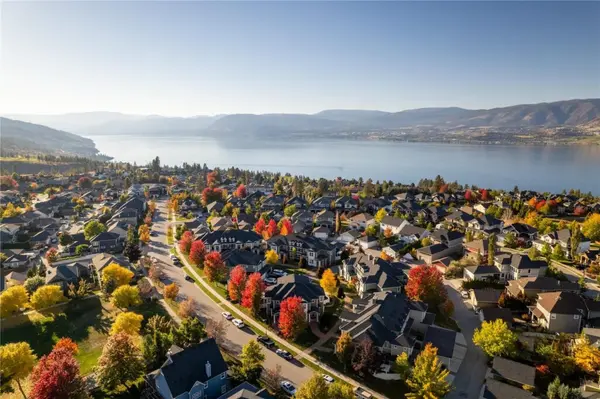
The changing colours through vineyards, orchards and hillside neighbourhoods also make this one of the prettiest times of year in the Okanagan.
Fall is also a nice reminder that Kelowna doesn't simply have "summer and ski season."
The shoulder seasons are a big part of living here too.
🔥 What About Wildfire Smoke?
This deserves an honest answer because it's something many people ask before moving to the Okanagan.
Wildfire smoke can affect Kelowna during the summer.
The smoke doesn't necessarily come from a wildfire close to the city. Fires elsewhere in BC or farther away can send smoke into the valley, where it may settle for a period of time.
Some summers are relatively clear.
Others have stretches where air quality is noticeably affected.
That doesn't mean Kelowna itself is directly threatened by wildfire every summer, and it would be misleading to suggest that it is.
But it would also be misleading to pretend smoke isn't part of living in the Interior.
I think the best approach is simply to be aware of it and prepared.
During wildfire season, Environment Canada publishes the Central Okanagan Air Quality Health Index, which is a useful way to check current conditions:
https://weather.gc.ca/airquality/pages/bcaq-008_e.html
You can also check current provincial air-quality warnings here:
For many households, having good indoor air filtration also becomes part of summer planning.
🏔️ Does the Weather Change Depending on Where You Live?
Yes — and this is something worth understanding when you're choosing a neighbourhood.
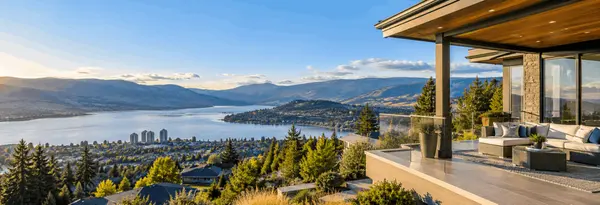
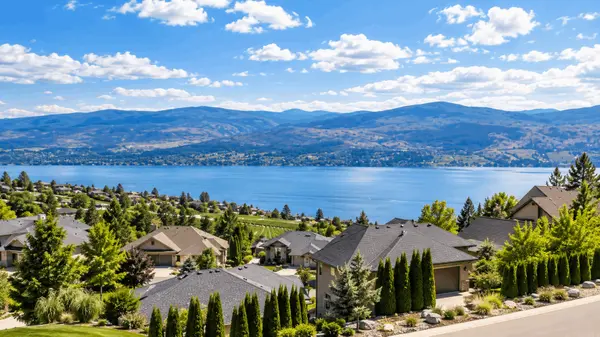
Kelowna's elevation changes considerably from the lakefront to hillside communities.
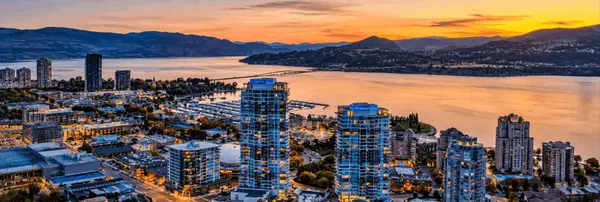
Downtown sits relatively close to lake level, while areas such as Black Mountain, Wilden, Dilworth Mountain, McKinley Beach and parts of the Upper Mission sit higher.
Those higher-elevation areas can experience:
- More snow accumulation
- Icy or steeper roads
- Slightly cooler temperatures
- Snow that lasts longer than it does near the lake
The City of Kelowna even designates several hillside neighbourhoods as snow-route areas during significant snowfall events.
I wouldn't choose a neighbourhood based on weather alone, but if winter driving or steep roads are a concern, it's worth considering.
My Best Neighbourhoods in Kelowna guide gives you a better sense of how terrain and lifestyle vary across the city.
🎿 A Great Example of How Much Elevation Matters
Big White Ski Resort is a perfect example.
It's close enough to Kelowna to be part of everyday winter life for many locals, but sits more than 1,000 metres above the city.
The result is a completely different climate.
You can leave a relatively mild, cloudy Kelowna and drive up into deep snow and sunshine.
It's another reason Kelowna weather can be difficult to summarize with a single temperature or snowfall number.
🌿 Meghan's Local Insight
One thing that took some getting used to when I moved to the Okanagan was just how localized the weather can feel.
You can have grey skies in the valley, snow still sitting in a hillside neighbourhood and sunshine higher in the mountains — all on the same day.
That's also why I don't think climate averages tell the whole story.
When you're deciding where to live, think about the elevation of the neighbourhood, the roads you'll drive regularly and how much winter maintenance you're comfortable with.
And in summer, think about practical things too — air conditioning, shade, outdoor space and how you'll use your home during the hottest part of the year.
🌊 How the Weather Shapes the Okanagan Lifestyle
The four-season climate is a big part of why people choose to live here.
Summer is built around beaches, boating, hiking, cycling, wineries and golf.
Fall brings harvest season, cooler trails and quieter lake days.
Winter shifts toward skiing, snowshoeing and indoor activities.
Then spring starts the cycle all over again.
It's one of the things I love most about living here — you're not waiting all year for one short season to enjoy the outdoors.
The activities simply change with the weather.
❓ Frequently Asked Questions
Does Kelowna get a lot of snow?
Kelowna gets regular winter snowfall, but generally less than many Prairie and eastern Canadian cities. Snowfall can also vary noticeably between the valley floor and higher-elevation neighbourhoods.
How hot does Kelowna get in summer?
Temperatures commonly reach the 30s during July and August. Hotter stretches can occur during heat waves, while extreme temperatures such as those experienced during the 2021 heat dome are not typical summer conditions.
Does it rain a lot in Kelowna?
No. Kelowna has a relatively dry climate and receives considerably less precipitation than coastal BC. Summers in particular tend to be hot and dry.
Does wildfire smoke affect Kelowna every summer?
Wildfire smoke is a recurring summer consideration in the Okanagan, but the severity and duration vary considerably from year to year. Smoke can also originate from fires far outside the immediate Kelowna area.
Are Kelowna winters mild?
Compared with many inland Canadian cities, Kelowna winters are relatively mild, but they still include snow, freezing temperatures and icy conditions.
Is weather different in Kelowna's hillside neighbourhoods?
Yes. Higher-elevation neighbourhoods generally experience more snow and cooler conditions than areas closer to Okanagan Lake.
📚 Continue Exploring the Living Okanagan Resource Centre
- Moving to Kelowna: Everything You Need to Know Before You Move
- Cost of Living in Kelowna
- Best Neighbourhoods in Kelowna
- Kelowna vs. West Kelowna: Which Is Better for You?
- Schools in Kelowna: What Families Should Know Before Moving
- Healthcare in Kelowna: What to Know Before You Move
- Getting Around Kelowna: Driving, Transit, Traffic & Commute Times
Thinking About Moving to Kelowna?
Weather is only one part of deciding whether Kelowna is right for you, but it has a big impact on everyday life.
If you're comparing neighbourhoods or trying to understand what living here might actually feel like throughout the year, I'd be happy to help you explore the areas that fit your lifestyle and priorities.
Sometimes knowing what to expect before you arrive makes settling into the Okanagan that much easier.
Categories
Recent Posts