Pros & Cons of Living in Kelowna: What to Know Before You Move
📖 Estimated reading time: 8 minutes
Pros & Cons of Living in Kelowna: What to Know Before You Move
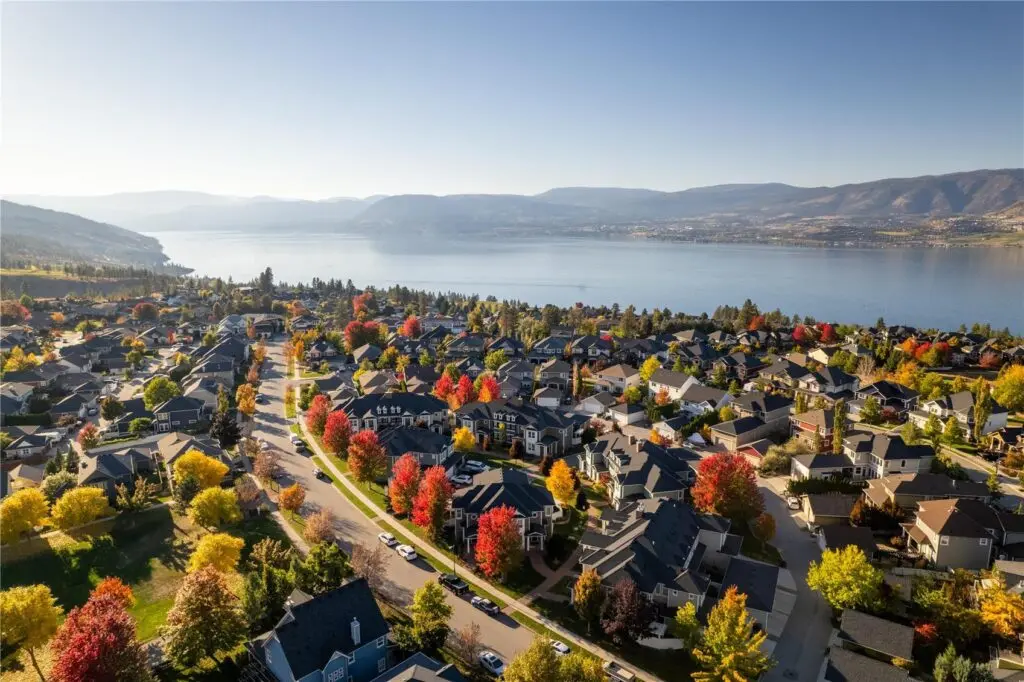
If you're considering moving to Kelowna, you've probably already seen the beautiful version of the city.
Okanagan Lake. Wineries. Beaches. Golf courses. Mountains. Skiing at Big White.
Those things are absolutely part of living here—but they're not the whole story.
Kelowna also has relatively high housing costs, a challenging job market in some industries, summer traffic, wildfire smoke in some years and neighbourhoods where owning a vehicle makes life considerably easier.
So rather than asking whether Kelowna is a "good" place to live, I think the better question is:
Does Kelowna fit the way you actually want to live?
Here's an honest look at some of the advantages and trade-offs to consider before making the move.
If you're just starting your research, my Moving to Kelowna guide gives you the broader overview first.
☀️ PRO: The Okanagan Lifestyle Is Hard to Replicate
This is probably Kelowna's biggest draw.
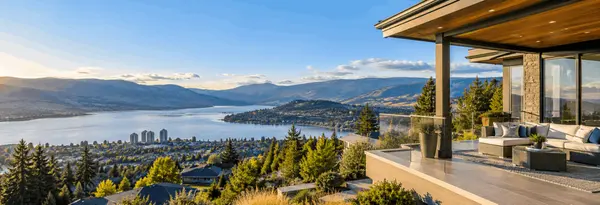
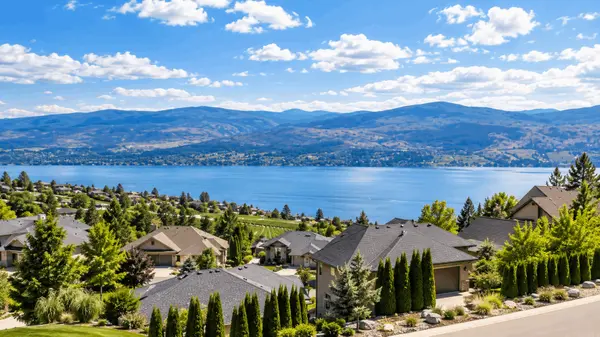
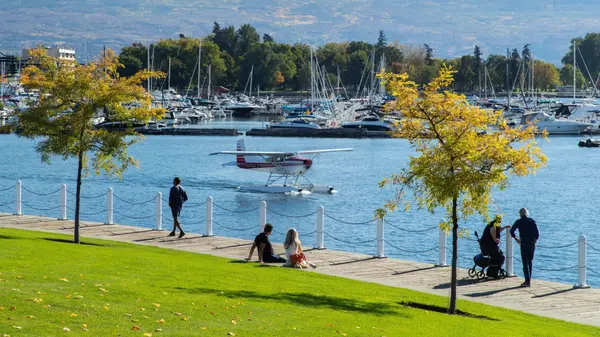
Okanagan Lake runs through the centre of daily life, with beaches, parks and waterfront trails throughout the city.
You can hike Knox Mountain, bike along the Rail Trail, golf at courses throughout Kelowna, spend an afternoon at a winery or head to Big White for a ski day in winter.
And unlike a vacation destination where those activities require planning, living here means they can become part of an ordinary weekend.
If lifestyle is one of the main reasons you're considering Kelowna, I've covered this much more fully in my Things to Do in Kelowna guide.
💰 CON: Housing Isn't Cheap
Kelowna is not an inexpensive Interior BC market.
Housing costs have risen significantly over the past several years, and buying a detached home can still require a substantial budget.
The trade-off is that there is a wide variety of housing—from downtown condos and townhomes to suburban houses, hillside communities, lakefront properties and homes farther from the city centre.
Renters currently have more choice than they have had in recent years as well. Kelowna's purpose-built rental inventory has expanded substantially, and CMHC reported a 6.4% rental vacancy rate in October 2025.
That doesn't mean rent is inexpensive. It does mean renters may currently encounter less competition and more choice than during Kelowna's tighter rental years.
For current housing, rent and everyday expense information, see my Cost of Living in Kelowna guide.
💼 CON: Don't Move Here Assuming You'll Easily Find a Job
This is an important one in 2026.
Kelowna's labour market has been soft recently. Statistics Canada reported a 9.0% unemployment rate for the Kelowna CMA in August 2026, although the rate has moved considerably from month to month.
There's an important bit of context behind that number: the increase hasn't simply been caused by jobs disappearing. The labour force has also been growing faster than job creation, meaning more people have been actively looking for work even during months when Kelowna added jobs.
For someone relocating, the practical takeaway is fairly simple.
I'd be cautious about moving to Kelowna without having your employment situation figured out first.
If you work remotely, are transferring with an employer or already have a position lined up, this may be much less of a concern.
But if you're planning to arrive and then start looking, I'd research opportunities in your particular industry before making the move.
🌤️ PRO & CON: You Get Four Real Seasons
Kelowna has hot, dry summers, colourful falls, a genuine winter and a beautiful spring.
Summer temperatures commonly reach the 30s during July and August, while winter brings snow and freezing temperatures.
Whether that's a positive depends on what you like.
If you enjoy hot summers, lake days and having access to skiing in winter, the climate can be a major advantage.
If you dislike heat or want a mild coastal-style winter, it may be less appealing.
Another reality of living in the Okanagan is wildfire smoke.
Smoke can affect air quality during some summers, sometimes from fires located far away from Kelowna. The severity varies considerably from year to year.
That's different from direct wildfire risk. Kelowna and the surrounding region do have a real wildfire history, but smoke is the much more common way residents experience wildfire season.
I've covered the seasons, temperature, smoke and neighbourhood differences in much more detail in my Weather in Kelowna guide.
🏖️ PRO: Outdoor Recreation Is Right Outside Your Door
Kelowna makes it unusually easy to combine city life with outdoor recreation.
Depending on where you live, you can be close to:
- Beaches
- Hiking and biking trails
- Golf
- Boating and paddling
- Wineries and breweries
- Skiing and snowboarding
- Parks and playgrounds
Big White isn't actually in Kelowna, but it's close enough that heading up for a ski day is realistic rather than requiring a weekend away.
That's a major lifestyle advantage if you genuinely use these amenities.
If you don't particularly care about the lake, skiing, hiking, golf or wineries, you may find yourself wondering whether the cost of living here is worth paying for amenities you rarely use.
🚗 CON: Kelowna Can Be Car-Dependent
This one depends heavily on the neighbourhood.
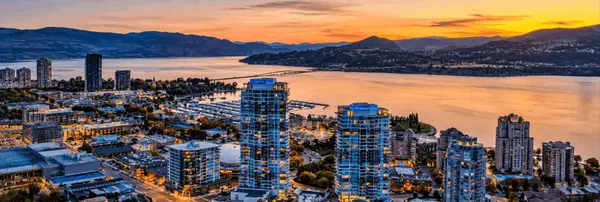
Downtown and some central areas allow you to walk or bike to quite a few amenities.
Move into hillside and suburban communities, however, and a vehicle becomes much more important.
Kelowna does have a regional bus system and an expanding active-transportation network, but there is no rapid-transit or rail system.
For most households, I'd still consider having access to a vehicle a significant advantage.
I've covered driving, transit, cycling and commute considerations in my Getting Around Kelowna guide.
🌉 CON: The Bridge Can Affect Your Daily Life
If you're considering West Kelowna, don't look only at the distance between the home and your workplace.
The William R. Bennett Bridge is the only direct road crossing between Kelowna and West Kelowna, which means an accident, construction or peak traffic can affect travel times.
That doesn't mean living in West Kelowna is inconvenient for everyone.
If you work from home, work on the west side or don't cross the bridge every day, it may barely affect you.
But if you're commuting into Kelowna five days a week, it's something I'd factor into your home search.
My Kelowna vs. West Kelowna guide goes into those differences in more detail.
✈️ PRO: Kelowna Has Excellent Connectivity for a City Its Size
Kelowna International Airport is a major advantage.
YLW handled more than 2.3 million passengers in 2025, setting a new passenger record.
Having a busy airport right in the city makes work travel, visiting family and vacations considerably easier than they would be from many smaller Interior communities.
For people relocating from a larger city, having that connectivity can make Kelowna feel much less isolated than its geography might suggest.
🏥 PRO & CON: Strong Hospital Care, But Finding a Family Doctor Can Take Time
Kelowna General Hospital is one of the major healthcare centres in BC's Interior and provides emergency, surgical, cardiac, maternity and other specialized services. Kelowna is also home to BC Cancer – Kelowna.
That's a significant advantage compared with many smaller communities.
The trade-off is primary care.
Finding a family doctor or nurse practitioner can take time, and newcomers shouldn't assume they'll immediately find a permanent primary-care provider after arriving.
If healthcare access is particularly important to your move, my Healthcare in Kelowna guide explains what to arrange before moving and where to start once you're here.
👨👩👧 PRO: There's a Lot Here for Families
Kelowna offers beaches, parks, playgrounds, recreation centres, sports programs and plenty of outdoor activities for families.
Central Okanagan Public Schools serves the region and offers neighbourhood schools, French Immersion and other programs.
One trade-off created by years of population growth is school capacity. Some areas have experienced pressure as enrolment has grown, so I wouldn't choose a home based on assumptions about a particular school.
Always verify the current catchment and registration situation.
My Schools in Kelowna guide covers this in detail.
🍷 PRO: You Get a Small-City Feel With More Amenities Than You Might Expect
Kelowna isn't Vancouver, Calgary or Toronto—and for many people, that's exactly the point.
But it also isn't a tiny resort town.
You have a major hospital, university and college campuses, an international airport, restaurants, wineries, breweries, arts and cultural facilities, junior hockey, concerts and shopping alongside the outdoor lifestyle.
That combination is one of Kelowna's strengths.
You can live in a relatively compact city without giving up every amenity you'd expect from a larger centre.
🚦 CON: Summer Gets Busy
Kelowna changes noticeably in July and August.
Beaches get busier. Boats fill the lake. Patios fill up. Traffic increases and popular areas become crowded.
That's partly the price of living somewhere other people choose for their vacations.
Some residents love the energy of summer; others look forward to September.
If you're seriously considering moving here and aren't sure how you'd feel about the seasonal crowds, I'd recommend visiting during the middle of summer, not only during a quiet spring or fall weekend.
🏡 PRO & CON: Your Experience Depends A Lot on Your Neighbourhood
There isn't one universal "Kelowna lifestyle."
Living Downtown is very different from living in Black Mountain.
The Lower Mission feels different from Wilden.
Upper Mission and Kettle Valley offer different trade-offs again.
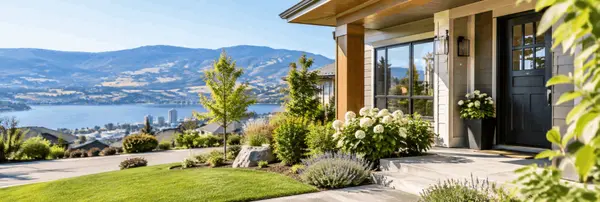
Some neighbourhoods prioritize walkability and proximity to the lake. Others offer views, newer homes, larger lots or easier access to outdoor recreation—but require more driving.
That's why I don't think choosing a Kelowna neighbourhood should start with a list of which ones are supposedly "best."
It should start with how you want to live every day.
My Best Neighbourhoods in Kelowna guide breaks down those differences.
🌿 Meghan's Local Insight
Kelowna is one of those places where the things you love about it and the things that occasionally frustrate you can be closely connected.
Hot summers mean incredible lake days—but sometimes smoke.
Living in a growing Okanagan city gives you restaurants, recreation and amenities—but also traffic and higher housing costs.
Hillside neighbourhoods can give you beautiful views and quick access to trails—but you'll probably drive more.
For me, that's why the question isn't whether Kelowna is perfect.
It isn't.
The important question is whether the trade-offs make sense for the lifestyle you want.
⚖️ Who Might Love Living in Kelowna?
Kelowna may be a particularly good fit if you:
- Spend a lot of time outdoors
- Love hot summers and having four seasons
- Want access to lakes, golf, hiking or skiing
- Prefer a mid-sized city over a major metropolitan area
- Have remote work, transferable employment or a job arranged before moving
- Don't mind driving depending on your neighbourhood
- Like having wineries, restaurants and outdoor recreation close to home
🤔 Who Might Find Kelowna More Challenging?
You may want to think carefully if you:
- Need a large-city job market in a very specialized industry
- Strongly prefer public transit over driving
- Don't enjoy hot weather
- Are particularly sensitive to wildfire smoke
- Want big-city nightlife, shopping or cultural options
- Need to find a family doctor immediately
- Want inexpensive housing
- Would regularly need to cross the bridge at peak commuting times
None of those automatically means Kelowna isn't right for you.
They simply deserve consideration before you move rather than after.
❓ Frequently Asked Questions
Is Kelowna a good place to live?
It depends on what you value. Kelowna offers exceptional access to outdoor recreation, Okanagan Lake, skiing, wineries and a wide range of city amenities, but housing costs, driving, employment and summer crowds are important trade-offs.
What is the biggest downside of living in Kelowna?
There isn't one answer for everyone. Housing affordability, the current labour market, car dependency, wildfire smoke and healthcare access are among the most common practical considerations.
Is it easy to find work in Kelowna?
That depends heavily on your industry. As of August 2026, Kelowna's unemployment rate was elevated, so anyone relocating without a job already arranged should research their specific field carefully.
Does Kelowna get wildfire smoke every summer?
Smoke is a possibility during wildfire season, but the duration and severity vary significantly from year to year. Smoke can also come from fires elsewhere in BC rather than from a fire near Kelowna itself.
Do you need a car to live in Kelowna?
Not necessarily, but it depends greatly on where you live. Downtown and some central areas are much easier without a vehicle than hillside and suburban neighbourhoods.
📚 Continue Exploring the Living Okanagan Resource Centre
- Moving to Kelowna: Everything You Need to Know Before You Move
- Cost of Living in Kelowna
- Best Neighbourhoods in Kelowna
- Kelowna vs. West Kelowna
- Schools in Kelowna
- Healthcare in Kelowna
- Getting Around Kelowna
- Weather in Kelowna
- Utilities in Kelowna
- Things to Do in Kelowna
Thinking About Moving to Kelowna?
A relocation decision is about much more than finding a house you like.
It's about whether the community, lifestyle, commute, budget and everyday realities work for you.
If you're considering Kelowna, West Kelowna or another part of the Central Okanagan, I'm happy to help you compare areas honestly and narrow down which communities make the most sense for the way you want to live.
Because the goal isn't simply to move to Kelowna.
It's to make sure you're choosing a place that actually works for you. 🏡
Categories
Recent Posts