What Do Sellers Have to Disclose When Selling a Home in BC?
📖 Estimated reading time: 8 minutes
If you're preparing to sell your home in British Columbia, one question often comes up early:
What do I actually have to tell a buyer?
The answer isn't quite as simple as “disclose everything,” but it also isn't as simple as “buyer beware.”
BC sellers can have disclosure obligations when they know about significant problems with a property, particularly issues a buyer wouldn't reasonably discover during an inspection.
At the same time, not every repair, imperfection or piece of a home's history automatically needs to be disclosed.
Understanding that distinction can help protect you as a seller while giving buyers the information they need to make an informed decision.
Here's what BC homeowners should know before putting their property on the market.
What Is a Material Latent Defect?
This is one of the most important terms to understand when talking about seller disclosure in BC.
A latent defect is something that wouldn't normally be discovered through a reasonable inspection of the property.
A material latent defect is more significant. It can include a hidden issue that makes the property dangerous or potentially dangerous, unsuitable for habitation or its intended use, very expensive to repair, subject to a local-government remediation order, or lacking required municipal permits.
The important pieces are generally that the issue isn't something a buyer would reasonably discover through an inspection and that it's serious enough to be considered material.
That is different from a problem that's readily visible or discoverable.
Patent vs. Latent Defects
Here's an easier way to think about it.
Patent Defects
A patent defect is visible or something a reasonable inspection should uncover.
For example, a buyer may be able to see damaged flooring, a cracked window or other obvious deterioration while viewing or inspecting a property.
BC's general principle of caveat emptor — buyer beware — means buyers are expected to conduct reasonable due diligence when purchasing a property.
Latent Defects
A latent defect is hidden and wouldn't normally be discovered through a reasonable inspection.
Think of something happening behind a finished wall rather than something sitting in plain sight.
But being hidden doesn't automatically make something a material latent defect. The seriousness and circumstances of the problem matter too.
That's one reason disclosure questions aren't always black and white.
If the Buyer Doesn't Ask, Do You Still Have to Disclose It?
Potentially, yes.
One of the biggest misconceptions is:
“If the buyer doesn't ask, I don't have to tell them.”
That isn't a safe approach when you're aware of a material latent defect. The obligation surrounding a known material latent defect doesn't simply disappear because a buyer didn't happen to ask the right question.
On the other hand, sellers generally aren't expected to proactively point out every visible imperfection or ordinary maintenance issue a buyer can reasonably discover themselves.
And if a buyer asks a direct question about the property, don't guess or provide an answer you aren't confident is accurate.
Do You Have to Complete a Property Disclosure Statement in BC?
Not necessarily.
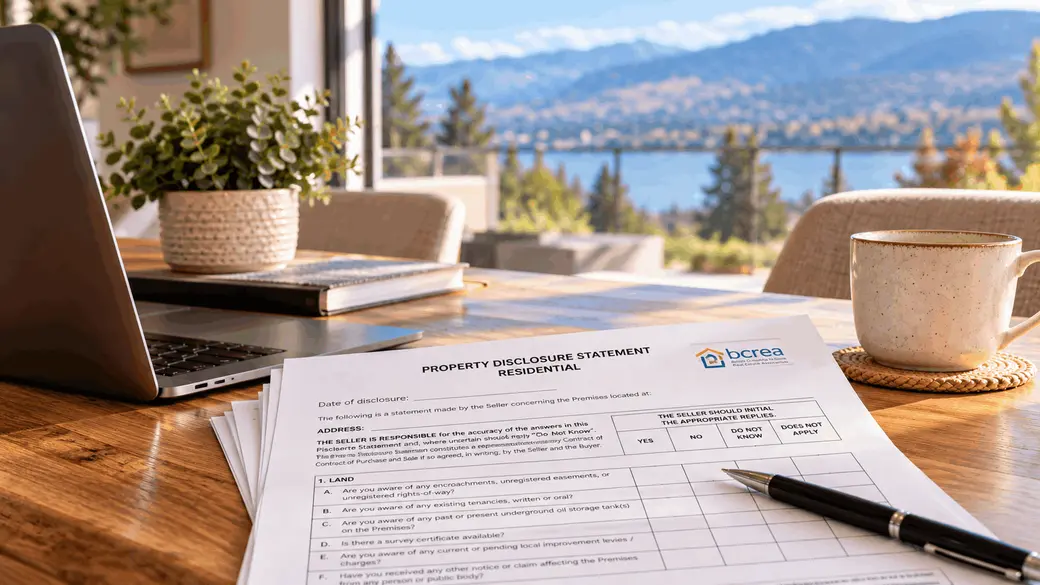
The Property Disclosure Statement (PDS) is widely used in BC real estate transactions, but completing one is generally voluntary.
That doesn't mean sellers can avoid their underlying disclosure obligations simply by refusing to complete one.
The PDS is a disclosure tool — it isn't the source of the obligation surrounding known material latent defects.
BC's forms were updated in 2025, including the introduction of a Property No Disclosure Statement (PNDS) for sellers who choose not to make the representations contained in a standard PDS.
Using a PNDS, however, doesn't give a seller permission to conceal a known material latent defect.
Be Careful About Guessing on a PDS
This became particularly important following a 2025 BC Court of Appeal decision called Sewell v. Abadian.
The case involved a seller who provided a PDS but crossed out its substantive sections. The seller also knew about an unpermitted addition to the property.
The Court ultimately found that the PDS, considered as a whole, created a misleading impression about what the seller knew.
The practical lesson for most homeowners is much simpler than the court case:
If you're going to complete a PDS, answer it carefully and honestly.
If you genuinely don't know an answer, say that rather than guessing.
And don't assume that crossing out questions, leaving sections blank or giving incomplete answers automatically protects you.
What Types of Property Issues Should Sellers Think About?
There isn't a simple checklist where every item automatically means “must disclose.”
The circumstances surrounding an issue matter.
Before listing, I would want to know about things such as:
- Previous or current water intrusion or flooding
- Roof leaks
- Foundation or structural concerns
- Mould
- Plumbing problems, including Poly-B
- Electrical concerns
- Previous fire damage
- Significant pest or insect damage
- Unpermitted renovations or additions
- Secondary suites
- Boundary or encroachment disputes
- Local-government orders or notices
- Septic-system problems
- Well or water-quality concerns
- Previous grow-op or drug-production use
Telling your REALTOR® about something doesn't necessarily mean it must immediately be advertised to every buyer.
It gives us an opportunity to understand the circumstances, gather the appropriate information and determine how it should be handled.
What About Poly-B Plumbing?
Poly-B is something that can come up in Okanagan real estate, particularly during inspections and insurance inquiries.
Not every Poly-B system is identical. Its configuration, fittings, condition, repair history and any previous leaks can all be relevant.
It may also be something a qualified home inspector identifies during an inspection, particularly where portions of the plumbing are accessible.
From a practical seller perspective, though, my approach is straightforward:
If you know your home has Poly-B, tell your REALTOR® before listing.
That allows us to address it appropriately rather than having it come as a surprise during a buyer's inspection or insurance investigation.
Unpermitted Renovations and Secondary Suites
This is an important one.
A lack of required municipal permits can fall within BC's material latent defect framework.
That means sellers should be particularly careful with additions, major renovations and secondary suites where the necessary permits or approvals may not have been obtained.
Secondary suites are especially relevant in Kelowna.
The City of Kelowna has specific permitting and occupancy requirements for legal secondary suites. If you're unsure whether your suite or a previous renovation was properly permitted, it's worth investigating before you're in the middle of a transaction.
What About Previous Fire Damage?
If you know your home has experienced a fire in the past, my preference is to address that history openly.
Where available, it's helpful to gather documentation showing what happened, what repairs or remediation were completed and whether the appropriate permits and inspections were obtained.
A previous fire doesn't necessarily mean there's something currently wrong with the home.
But from a practical perspective, I'd rather have the information available and deal with the question upfront than have a buyer discover the history later and wonder why it wasn't discussed.
If there is known, hidden and significant damage remaining from a previous fire, that can raise a different disclosure issue.
For more about wildfire and other local considerations when selling, see Selling Your Home in the Central Okanagan: A Complete Guide.
Rural Properties: Wells and Septic Systems
If you're selling a rural property in the Okanagan, there can be additional information worth gathering early.
For properties with wells, that may include:
- Well records
- Water-quality test results
- Pumping or flow-test information
- Information about closed wells
- Applicable water-licence documentation
For septic properties, gathering available records and maintenance information can also help answer buyer questions. Interior Health maintains sewerage records, although records aren't guaranteed to be available for every property.
The exact disclosure obligation still depends on the circumstances, but knowing what documentation exists before listing can make the process considerably easier.
What About Leasehold Property?
Leasehold properties — including properties on Westbank First Nation land — have additional considerations because the ownership and transaction structure differs from conventional freehold property.
Seller disclosure is only one piece of that picture.
If you own or are considering a leasehold property, I've explained the broader differences in Leasehold vs. Freehold Property in the Okanagan.
For property-specific legal questions involving First Nations leasehold land, independent legal advice may also be appropriate.
What About a Former Grow-Op?
This is one I would always want to know about before listing.
If you're aware that a property was previously used as a grow-op or for drug production, tell your REALTOR® — even if the property was subsequently remediated.
Any available documentation regarding remediation, inspections, permits or other work completed on the property should also be gathered.
Physical problems associated with a former grow operation — such as mould, electrical modifications, structural changes or other hidden damage — can raise additional concerns of their own. Claude's BCFSA research specifically identifies those physical issues separately from the property's history.
This is an area where I'd rather investigate the property's history and documentation before listing than make assumptions about what does or doesn't need to be addressed.
Do You Have to Disclose a Death or Other Stigma?
This is different from a physical defect.
A stigma is something about a property's history or reputation that may matter to some buyers but doesn't physically affect the condition, appearance or function of the property.
A death in a home, including a suicide, generally doesn't need to be proactively volunteered simply because it occurred.
However, if a buyer specifically asks about something important to them, the question needs to be handled honestly if you choose to answer it.
On the buyer side, if a property's history is particularly important to my clients, I'll often do some additional due diligence as well — sometimes something as simple as searching the property address online to see whether there are publicly available news stories or other relevant information.
That doesn't replace a home inspection, title search or legal due diligence, but it can sometimes uncover information worth asking about.
Your REALTOR® Has Disclosure Responsibilities Too
This is an important distinction.
Your responsibilities as the property owner and your REALTOR®'s professional obligations aren't exactly the same.
BC real estate licensees have their own regulatory responsibilities regarding material latent defects.
If I become aware of a material latent defect, I can't simply ignore it because a seller doesn't want it disclosed. BCFSA requires a licensee who knows about a material latent defect to disclose it promptly to the other parties to the transaction.
That's another reason I encourage sellers to talk openly with me about potential concerns before the property is listed.
It gives us time to investigate the issue properly and determine the appropriate next step rather than dealing with it unexpectedly after an offer arrives.
What Should You Tell Your REALTOR® Before Listing?
Before putting your home on the market, tell your REALTOR® about anything you're aware of involving:
- Water, moisture or flooding
- Roof leaks
- Foundation or structural issues
- Mould
- Plumbing or electrical concerns
- Poly-B plumbing
- Previous fire damage
- Significant pest damage
- Renovations or additions
- Secondary suites
- Missing or uncertain permits
- Property-line or encroachment disputes
- Municipal orders or notices
- Septic or well issues
- Former grow-op or drug-production use
- Anything else you're unsure whether a buyer should know
You don't need to determine the legal significance yourself.
Start by telling your REALTOR® what you know.
Meghan's Local Insight
I'd much rather have a seller tell me about a potential concern before we list the property than discover it while we're negotiating with a buyer.
And telling me about something doesn't automatically mean we're putting a giant warning on the listing.
Sometimes we simply need to gather documentation. Sometimes we need to verify a permit. Sometimes an issue has already been properly repaired and we just need the records. And sometimes we may need advice from a lawyer, inspector, municipality or another professional before deciding how to proceed.
The important thing is that we're dealing with the facts early rather than hoping something doesn't come up later.
That protects you and helps us prepare for the questions buyers are likely to ask.
Frequently Asked Questions
Do I have to disclose a leak that was repaired?
It depends on the circumstances, including what happened, whether the problem was fully corrected and whether there is an ongoing hidden issue. Tell your REALTOR® about the history and provide any repair documentation you have.
What if I don't know the complete history of my home?
You're not expected to know something you genuinely don't know. Don't guess. If you're completing a PDS, answer based on your actual knowledge and use the appropriate “Do Not Know” response where applicable.
Can I refuse to complete a PDS?
A PDS is generally voluntary, and BC now has a Property No Disclosure Statement for sellers who decline to complete one. But declining a PDS doesn't eliminate obligations involving known material latent defects.
Does the buyer's home inspection remove my disclosure responsibility?
No. An inspection is part of the buyer's due diligence, particularly for defects that can reasonably be discovered. It doesn't give a seller permission to conceal or misrepresent a known hidden material issue.
Should I disclose Poly-B?
If you know your property has Poly-B, my practical advice is to tell your REALTOR®. It may be identified during an inspection anyway, and it can be relevant to a buyer's insurance and due diligence.
Do I have to disclose a death in the home?
A death is generally treated as a stigma rather than a physical defect and doesn't ordinarily need to be proactively volunteered. If a buyer specifically asks and you choose to answer, however, the response needs to be truthful.
What if I'm not sure whether something needs to be disclosed?
Don't try to make that determination yourself. Talk to your REALTOR® first. If the circumstances raise a legal question, obtaining advice from a BC real estate lawyer may be appropriate.
Continue Exploring
Selling Your Home in the Central Okanagan: A Complete Guide
Leasehold vs. Freehold Property in the Okanagan
Weather in Kelowna: What to Expect Year-Round
Thinking About Selling?
If you're considering selling a home in Kelowna, West Kelowna, Lake Country or the surrounding Central Okanagan, you don't need to have every question answered before reaching out.
We can start by looking at your property, discussing anything that may need attention before listing, and putting together a plan that makes sense for your home and your next move.
Meghan Williamson
Personal Real Estate Corporation
Living Okanagan | eXp Realty
📞 250-864-6497
✉️ meghan@livingokgn.ca
🌐 https://livingokgn.ca
Categories
Recent Posts