Healthcare in Kelowna: What to Know Before You Move
by Meghan Williamson
📖 Estimated reading time: 7 minutes
If you're thinking about moving to Kelowna, healthcare is one of those practical things that's worth understanding before you arrive.
You might be wondering:
Will I be able to find a family doctor?
Where do I go if I need care before I have one?
What happens to my prescriptions when I move provinces?
Kelowna is home to the Central Okanagan's major hospital and a range of healthcare services, but navigating the system can feel a little different when you're new to British Columbia.
Here's what you should know before you move.
🏥 Healthcare in Kelowna at a Glance
The Central Okanagan is served by Interior Health, one of British Columbia's regional health authorities.
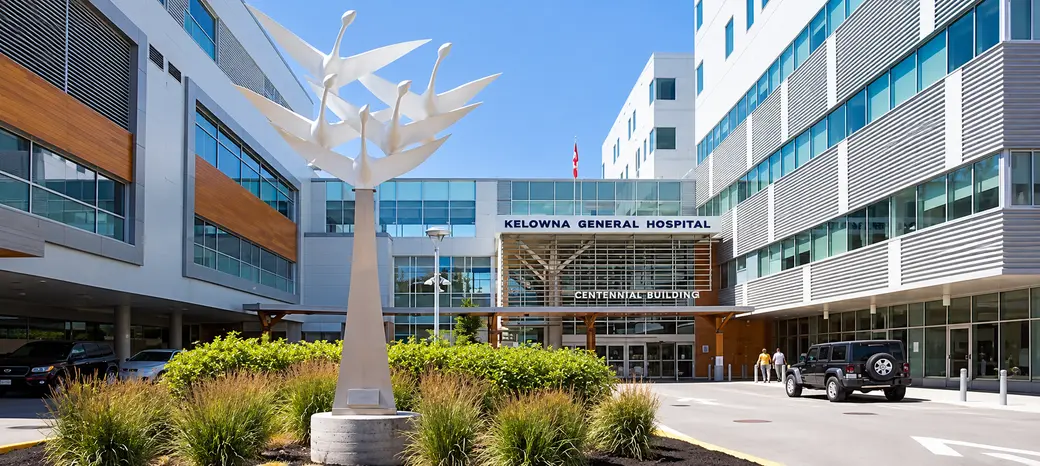
Kelowna is also home to Kelowna General Hospital (KGH), the region's major acute-care hospital and one of Interior Health's tertiary referral hospitals.
Beyond the hospital, residents may access care through:
- Family doctors and nurse practitioners
- Urgent and Primary Care Centres
- Walk-in clinics
- Virtual care
- Pharmacies
- HealthLink BC
- Specialist services
If you're arriving without a family doctor, there are still several ways to access care while you're waiting to connect with a regular primary-care provider.
🏨 Kelowna General Hospital
Kelowna General Hospital is the Central Okanagan's major hospital and provides emergency, inpatient, surgical and specialized care.
It serves not only Kelowna but patients from communities throughout BC's Interior.
Services include emergency and trauma care, surgery, cardiac care, maternity and obstetrics, pediatric emergency care, medical imaging, mental-health services and other specialized programs.
Kelowna is also home to BC Cancer – Kelowna, which provides cancer treatment and services for patients from throughout the Interior.
As with most regional healthcare systems, some highly specialized or rare procedures may require referral to a larger provincial centre, often in Vancouver.
Kelowna General Hospital:
https://www.interiorhealth.ca/locations/kelowna-general-hospital
👩⚕️ What If I Don't Have a Family Doctor?
This is probably one of the biggest healthcare questions for people moving to Kelowna.
Like many communities across British Columbia, connecting with a family doctor or nurse practitioner can take time.
If you don't have a primary-care provider, one of your first steps should be registering with BC's Health Connect Registry.
The registry is the provincial system used to connect people who need a family doctor or nurse practitioner with available primary-care providers.
There isn't a guaranteed wait time, so I recommend registering once you're eligible rather than waiting until you actually need ongoing care.
BC Health Connect Registry:
https://www.healthlinkbc.ca/find-care/health-connect-registry
While you're waiting, you can still access healthcare through urgent and primary care centres, walk-in services, virtual care and other community resources.
🩺 Urgent Care, Walk-In Clinics or the Emergency Room?
Knowing where to go can make navigating healthcare much easier when you're new to the area.
Urgent and Primary Care Centres (UPCCs) are designed for health concerns that need timely attention but aren't medical emergencies.
The Central Okanagan has urgent and primary care services in both Kelowna and West Kelowna.
Traditional walk-in and other community clinics are also available, although locations, hours and availability can change.
Rather than keeping a list that may quickly become outdated, HealthLink BC has a searchable tool that can help you find current services near you.
Find healthcare services near you:
https://www.healthlinkbc.ca/find-care/find-health-services
For serious or life-threatening emergencies, call 911 or go to the emergency department.
If you're deciding between living on either side of the bridge, my Kelowna vs. West Kelowna comparison also explains some of the differences in healthcare access and everyday services.
☎️ Save This Number: 811
One number that's particularly helpful when you're new to British Columbia is 811.
HealthLink BC's 811 service provides free, non-emergency health information and advice.
Depending on what you need, you can access nurses and other health professionals, and a health service navigator can help you determine what type of care may be appropriate or find services in your area.
Translation is also available in more than 130 languages.
It's a useful resource when you're not sure where to start — particularly before you've established yourself with a family doctor.
HealthLink BC 811:
https://www.healthlinkbc.ca/find-care/healthlink-bc-8-1-1-services
Remember: 811 is for non-emergency health information. Call 911 for emergencies.
💳 Moving to BC: What Happens to Your Health Coverage?
If you're moving to Kelowna from another province, this is something worth organizing before you arrive.
Eligible BC residents receive provincial healthcare coverage through the Medical Services Plan (MSP).
New residents may have a waiting period before their BC coverage begins, so don't assume your healthcare coverage automatically switches over the day you move.
Before leaving your current province, confirm how your existing provincial coverage applies during the transition and what steps you need to take.
Then apply for MSP as soon as you're eligible.
Apply for MSP:
https://www2.gov.bc.ca/gov/content/health/health-drug-coverage/msp/bc-residents/eligibility-and-enrolment/apply-for-msp
You may also want to consider temporary private coverage for services that aren't covered during your transition, depending on your circumstances.
For a broader look at household expenses when relocating, you can read my Cost of Living in Kelowna guide.
💊 What About Prescriptions?
If you take regular medication, this is one thing I'd organize before moving rather than waiting until you're running low.
BC pharmacies can generally work with your previous pharmacy to transfer active prescriptions, subject to applicable prescription and medication rules.
Before moving, it's helpful to have:
- A current list of medications
- Dosages
- Your prescribing doctor's information
- Your current pharmacy's contact information
- Enough medication to comfortably manage the transition, where possible
Once you arrive, choose a local pharmacy and ask them about transferring your prescriptions.
For medications with special prescribing or transfer requirements, speak directly with your pharmacist before the move.
👨👩👧 Healthcare for Families
Families moving to Kelowna have access to pediatric emergency care through Kelowna General Hospital, along with primary-care, urgent-care and community healthcare services.
If you're moving with children and don't already have a local family doctor or nurse practitioner, registering with the Health Connect Registry early is worthwhile.
For specialized pediatric care, some children may be referred to larger provincial centres depending on their healthcare needs.
Families researching a move may also find my Schools in Kelowna guide helpful when comparing neighbourhoods and planning everyday family life.
🤰 Maternity & Prenatal Care
Kelowna General Hospital provides maternity and obstetrical services for families throughout the region.
If you're moving while pregnant, I would make transferring your prenatal care one of your priorities before the move.
Ask your existing healthcare provider about transferring your records and arranging continuity of care in BC rather than waiting until you've arrived.
The same principle applies if you or someone in your family is already receiving ongoing specialist care.
🧠 Mental Health & Youth Services
Interior Health provides mental-health and substance-use services throughout the Central Okanagan.
Kelowna is also home to Foundry Kelowna, which provides integrated health and wellness services for youth and young adults ages 12–24, including mental-health, primary-care and substance-use supports.
Interior Health Mental Health & Substance Use:
https://www.interiorhealth.ca/locations/kelowna-mental-health-substance-use
Foundry Kelowna:
https://www.cmhakelowna.com/programs-supports/foundry-kelowna
For general non-emergency guidance and help finding appropriate services, 811 can also be a useful starting point.
📋 Healthcare Checklist Before Moving to Kelowna
A little preparation can make the transition much easier.
Before you move:
- Confirm how your current provincial health coverage works during your move
- Gather important medical records
- Make a current medication and dosage list
- Keep contact information for your doctors and specialists
- Speak with your pharmacy about transferring prescriptions
- Ask existing specialists about transferring care if necessary
After you arrive:
- Apply for MSP when eligible
- Register with the Health Connect Registry if you need a family doctor or nurse practitioner
- Transfer prescriptions to a local pharmacy
- Save 811 for non-emergency health information
- Use HealthLink BC to locate current healthcare services near you
- Call 911 for emergencies
🌿 Meghan's Local Insight
Healthcare isn't necessarily something that determines which Kelowna neighbourhood you choose, but it should be part of your overall relocation planning.
If you have young children, ongoing medical needs or regular specialist appointments, think about how healthcare fits into your everyday routine alongside work, school and other activities.
More importantly, don't wait until you need care to figure out how the system works.
Registering for a primary-care provider, transferring prescriptions and knowing where your nearest healthcare options are can make those first few months in a new community much easier.
If you're still deciding where in the city you might want to live, my guide to Kelowna's neighbourhoods can help you compare the different areas.
❓ Frequently Asked Questions
Does Kelowna have a hospital?
Yes. Kelowna General Hospital is the Central Okanagan's major acute-care hospital and provides emergency, surgical, inpatient and specialized services.
What do I do if I don't have a family doctor?
Register with BC's Health Connect Registry. While you're waiting to connect with a provider, urgent and primary care centres, walk-in services, virtual care and HealthLink BC can help you access or navigate care.
What is 811 in BC?
811 connects you with HealthLink BC for free, non-emergency health information and assistance finding appropriate healthcare services.
Is there a waiting period for healthcare when moving to BC?
New BC residents may have a waiting period before MSP coverage begins. Confirm your transition coverage with your current province before moving and apply for MSP as soon as you're eligible.
Can I transfer prescriptions from another province?
Generally, yes. A BC pharmacy can often arrange a transfer with your previous pharmacy, although some medications have additional rules or requirements.
Does West Kelowna have a hospital?
Kelowna General Hospital is the region's hospital. West Kelowna has urgent and primary care services for many non-emergency healthcare needs.
📚 Continue Exploring the Living Okanagan Resource Centre
- Moving to Kelowna: Everything You Need to Know Before You Move
- Cost of Living in Kelowna
- Best Neighbourhoods in Kelowna
- Kelowna vs. West Kelowna: Which Is Better for You?
- Schools in Kelowna: What Families Should Know Before Moving
- Getting Around Kelowna: Driving, Transit, Traffic & Commute Times
- Living in West Kelowna (coming soon)
- Black Mountain Neighbourhood Guide (coming soon)
Thinking About Moving to Kelowna?
Healthcare is only one piece of planning a move.
If you're comparing neighbourhoods, considering Kelowna versus West Kelowna or simply trying to understand what everyday life here might look like, I'd be happy to help you sort through your options.
There's no pressure — sometimes understanding the practical side of living here makes the bigger decision much easier.
Categories
Recent Posts