Buying a Home in Kelowna: What to Know Before You Start Looking

📖 Estimated reading time: 19 minutes
Planning to buy a home in Kelowna? Learn what to expect from mortgage pre-approval and property searches to making an offer, understanding closing costs and getting the keys.
Buying a home is a significant decision, whether you’re purchasing your first property, relocating to Kelowna, resizing to better suit your lifestyle or looking for your next home.
It’s easy to begin by browsing listings and imagining what your next home could look like. But understanding the buying process before you start seriously searching can make a meaningful difference.
In British Columbia, purchasing a home involves several steps, from arranging financing and understanding representation to reviewing property documents, making an offer and completing the purchase.
There are also local considerations in Kelowna and the surrounding communities that may affect your decision, including strata ownership, leasehold properties on First Nations land, secondary suites, hillside properties and municipal regulations.
This guide walks you through the process so you can begin your search with realistic expectations and a clearer understanding of what lies ahead.
1. Start With Your Budget and Mortgage Pre-Approval
Before booking showings, speak with a mortgage broker or lender to understand your financing options.
A mortgage pre-approval provides an indication of how much you may be able to borrow based on your income, debts, credit history, down payment and other financial circumstances.
However, the amount a lender is willing to approve isn’t necessarily the amount you’ll feel comfortable spending.
Consider the Full Cost of Homeownership
In addition to your mortgage payment, your monthly housing expenses may include:
- Property taxes
- Home insurance
- Strata fees, if applicable
- Utilities and internet
- Repairs and regular maintenance
- Savings for larger future expenses
For example, a detached home may require budgeting for roofing, exterior maintenance and landscaping, while a strata property may have monthly fees and potential special levies.
The goal is to establish a purchase budget that works for your lifestyle, not simply to borrow the maximum amount available.
What to Bring to Your First Mortgage Meeting
Your mortgage professional can tell you exactly what documentation is required, but it helps to have the following information available:
- Recent pay statements or other income documentation
- Employment details
- Information about existing loans and debts
- An estimate of your down payment and where the funds are coming from
- Details of any other properties you own
- Information about your savings and available funds for closing costs
If you’re self-employed or have variable income, additional documentation may be required.
Pre-Approval Isn’t Final Financing Approval
A pre-approval doesn’t guarantee that a lender will finance every property within your approved price range.
Final approval can depend on the property, appraisal, lending requirements and your financial circumstances at the time of purchase.
If you’re planning to change jobs, purchase a vehicle or take on additional debt, speak with your mortgage professional about how those decisions could affect your financing.
A useful starting point: Establish your comfortable monthly budget first, then work backward to determine an appropriate purchase price.
2. Understand Your Down Payment and Available Buyer Programs
Your down payment is an important part of purchasing a home, but it isn’t the only money you’ll need.
Minimum down payment requirements in Canada depend on the purchase price and mortgage eligibility.
Buyers purchasing with less than 20% down will generally require mortgage default insurance, subject to the applicable lending rules.
A mortgage professional can explain how different down payments affect your mortgage payments, insurance premiums and overall borrowing costs.
Government Programs Worth Exploring
Several federal and provincial programs may help eligible homebuyers.
First Home Savings Account (FHSA)
The FHSA allows eligible first-time buyers to save toward a qualifying home purchase with certain tax advantages.
Learn about the First Home Savings Account on the Canada Revenue Agency website
Home Buyers’ Plan (HBP)
The Home Buyers’ Plan allows eligible buyers to withdraw funds from an RRSP to purchase or build a qualifying home, subject to repayment requirements.
Learn about the Home Buyers’ Plan on the Canada Revenue Agency website
BC First-Time Home Buyers’ Program
Eligible first-time buyers may qualify for a full or partial exemption from BC’s Property Transfer Tax.
Eligibility includes citizenship or permanent residency requirements, BC residency requirements, restrictions relating to previous ownership of a principal residence and requirements to occupy the purchased property.
For qualifying purchases, the exemption can eliminate Property Transfer Tax on homes with a fair market value of up to $835,000, subject to the program’s conditions. A partial exemption may apply above that amount and below $860,000.
See the BC government’s First-Time Home Buyers’ Program details
BC Newly Built Home Exemption
Eligible purchasers of qualifying newly built homes may also receive a Property Transfer Tax exemption.
See the BC government’s Newly Built Home Exemption details
Federal GST Relief for Eligible First-Time Buyers
Qualifying first-time buyers purchasing eligible new homes may benefit from a federal GST rebate. This generally does not apply to ordinary resale residential homes.
Learn about the First-Time Home Buyers’ GST/HST Rebate on the Canada Revenue Agency website
Government programs have specific eligibility requirements, and thresholds can change. Confirm the current rules with the appropriate government agency and qualified financial or tax professional before relying on a particular benefit.
3. Understand How Working With a REALTOR® Works in BC
A REALTOR® can help you evaluate properties, understand local market conditions, arrange showings, prepare offers and navigate the steps involved in purchasing a home.
In British Columbia, real estate professionals must explain the nature of representation and provide the required disclosures.
Why Representation Matters
When a real estate professional represents you, they have legal and professional duties to you, including loyalty, confidentiality and acting in your best interests.
It’s important to understand the difference between working with a professional who represents you and communicating with the listing agent, who generally represents the seller.
Your REALTOR® must provide the required Disclosure of Representation in Trading Services information so you understand the nature of your relationship.
Dual agency, where one real estate professional represents both buyer and seller in the same transaction, is prohibited in BC, subject to a narrow exception for certain remote and underserved locations.
Before working with a REALTOR®, ask about their experience in your preferred areas, communication approach and how they’ll help you evaluate properties beyond the listing details.
For more information, read BCFSA’s Consumer Guide to Conflict of Interest.
4. Choose the Right Property Type and Ownership Structure
Kelowna offers a variety of housing options, each with different costs, responsibilities and considerations.
Detached Homes
Detached homes may offer greater privacy, outdoor space and flexibility.
However, owners are generally responsible for maintaining the home, landscaping and property.
Some detached homes are part of strata developments, so it’s important to confirm the ownership structure rather than assuming all detached properties are non-strata.
Townhouses
Townhouses can provide a balance between living space and maintenance responsibilities.
Many are part of strata corporations, meaning owners contribute to shared expenses and must follow the applicable bylaws and rules.
Condominiums
Condos may appeal to first-time buyers, resizers and people looking for a lower-maintenance lifestyle.
When comparing condos, consider more than the monthly strata fee. The building’s financial position, maintenance history, insurance and upcoming projects are also important.
Freehold, Leasehold and First Nations Land
Not every property in the Central Okanagan has the same ownership structure.
Some homes are freehold, while others involve leasehold interests, including certain residential developments on Westbank First Nation lands.
Purchasing a leasehold interest does not mean purchasing ownership of the underlying land. The buyer’s rights and obligations depend on the lease and other applicable arrangements.
Leasehold ownership may affect financing, resale, ongoing expenses and long-term ownership considerations.
Tax treatment can also differ on leasehold land, including Property Transfer Tax, GST, property taxes and Home Owner Grant administration.
Arrangements vary by First Nation and by development. Westbank First Nation lands are one local example, but buyers should not assume that every leasehold property has the same rules or tax treatment.
Before purchasing, review the remaining lease term, applicable fees, restrictions, financing requirements and tax obligations with your lawyer or notary and other qualified professionals.
For a more detailed explanation, read Leasehold vs. Freehold Property in the Okanagan.
5. Start Your Search With Clear Priorities
Once you’ve established your budget and preferred property type, the next step is identifying what matters most.
It can help to separate your priorities into three categories.
Must-haves: Features essential to your daily life, such as bedrooms, accessibility, parking or proximity to work.
Preferences: Features you’d enjoy but could compromise on, such as a particular view, larger yard or additional living space.
Deal-breakers: Things that would make a property unsuitable regardless of its other features.
This approach can help you evaluate homes more objectively.
Look Beyond Listing Photos
When viewing a property, consider:
- Layout and functionality
- Natural light and privacy
- Parking and storage
- Noise and surrounding activity
- Visible maintenance concerns
- Age and apparent condition of major systems
- Neighbourhood access and commuting routes
- How the property may suit your future needs
A property that looks appealing online may feel quite different in person.
Consider the Neighbourhood as Well as the Home
Kelowna neighbourhoods offer different lifestyles, housing types and amenities.
Some buyers prioritize walkability and proximity to shops or restaurants. Others prefer quieter residential streets, larger lots, outdoor recreation or easier access to work.
If you’re unfamiliar with the area, these guides may help:
- Best Neighbourhoods in Kelowna
- Living in Black Mountain, Kelowna
- Getting Around Kelowna
- Schools in Kelowna
6. Making an Offer and Understanding Conditions
When you find a home you’d like to purchase, your REALTOR® can help you prepare an offer based on the property’s circumstances and current market conditions.
An offer is more than the price you’re willing to pay. It also establishes the proposed terms of the transaction.
These may include:
- Purchase price
- Deposit amount and payment deadline
- Completion and possession dates
- Included and excluded items
- Conditions (often called subjects in BC)
- Other terms specific to the property
The seller may accept your offer, reject it or respond with a counteroffer.
If both parties agree to the terms and the offer is accepted, you have an accepted contract. If it contains buyer conditions, there are still important steps to complete before the purchase becomes firm.
What Happens After Your Offer Is Accepted?
For a typical purchase involving buyer conditions, the process generally follows this sequence.
Step 1: The offer is accepted
Both parties agree to the terms of the Contract of Purchase and Sale.
The contract sets out important deadlines, including when any conditions must be satisfied or waived.
Step 2: Complete your due diligence
During the condition period, you may need to arrange a home inspection, obtain satisfactory financing, review strata documents, investigate permits or complete other checks relevant to the property.
Your REALTOR® can help coordinate the process, while qualified professionals assess matters within their expertise.
Step 3: Decide whether to remove conditions
Once you’ve completed your investigations, you’ll need to decide whether you’re satisfied with the results.
Conditions should only be removed or waived after you’ve considered the relevant information and received appropriate professional advice.
If the conditions are not satisfied or waived by the applicable deadlines, the outcome depends on the contract’s wording and circumstances.
Step 4: The purchase becomes firm
Once all applicable conditions have been properly satisfied or waived, the contract generally becomes firm and binding, subject to its remaining terms.
At this stage, the transaction moves toward completion.
Step 5: Prepare for closing
Your lawyer or notary handles the legal conveyancing process, including reviewing the necessary documents, arranging registration and coordinating funds.
You’ll also need to finalize insurance, mortgage arrangements and any other requirements before completion.
Step 6: Completion and possession
On the agreed completion date, the legal transfer and payment process takes place.
You receive possession according to the date and time specified in the contract, which may be different from the completion date.
Understanding Common Buyer Conditions
Depending on the property, conditions may address:
- Financing approval
- Home inspection
- Review of strata documents
- Property records or permits
- Insurance availability
- Other property-specific concerns
Conditions are important contractual protections, but they must be properly drafted and understood.
BC’s Home Buyer Rescission Period
For many residential purchases in BC, eligible buyers have a statutory three-business-day rescission period.
The period starts on the next full business day after the offer is accepted and ends at 11:59 p.m. on the third business day. It runs alongside any contractual subject conditions.
A buyer who exercises this right must generally pay the seller a rescission fee equal to 0.25% of the purchase price and provide notice in accordance with the applicable requirements.
The rescission period doesn’t apply to every purchase. Exclusions include leasehold interests, residential property on leased land, auctions, court-ordered sales and certain new-development purchases.
The rescission period is separate from contractual conditions and should not be treated as a replacement for inspections, financing approval or other due diligence.
Read BCFSA’s Home Buyer Rescission Period consumer guide
7. Complete Your Due Diligence Before Removing Conditions
The period between an accepted offer and condition removal is often when some of the most important investigations take place.
The goal is to understand what you’re purchasing and identify concerns that may affect your decision.
Home Inspections
A qualified home inspector can assess accessible components of the property and identify visible issues or areas requiring further investigation.
Depending on the property, additional assessments by engineers, electricians, plumbers or other specialists may be appropriate.
An inspection cannot guarantee that a home is free from defects.
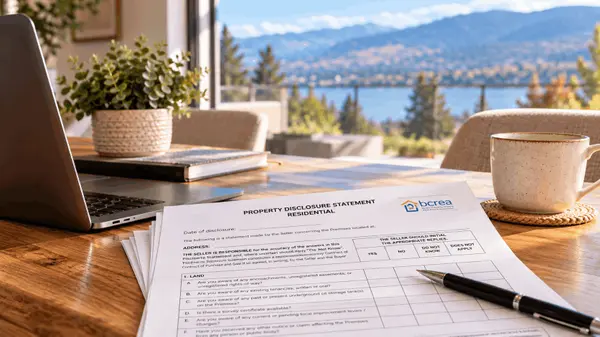
Property Disclosure Statements
A Property Disclosure Statement (PDS) may provide information about the property’s condition and history based on the seller’s responses.
However, a PDS is not a warranty or a substitute for independent investigation.
Sellers have legal obligations concerning disclosure of certain known material latent defects, but a PDS may be incomplete, unanswered or unavailable.
Buyers should investigate important concerns independently and obtain appropriate professional advice.
For more detail, read What Sellers Have to Disclose in BC.
Permits, Title and Property Records
Depending on the property, buyers may need to investigate:
- Building permits and occupancy records
- Renovation history
- Registered easements and covenants
- Property boundaries
- Zoning and permitted uses
- Relevant municipal records
A lawyer or notary can explain registered title matters, while the municipality can provide information about permits and zoning.
Strata Documents
If you’re purchasing a strata property, reviewing its documents is essential.
Important records may include the Form B Information Certificate, bylaws, meeting minutes, financial statements, depreciation reports, insurance information and special levy details.
A low strata fee doesn’t necessarily mean a building will cost less to own over time.
Consider its maintenance needs, financial planning, insurance obligations and whether the bylaws suit your lifestyle.
8. Kelowna-Specific Property Considerations
Every property is different, but several local considerations are worth investigating before purchasing.
Secondary Suites
A property with a basement suite or other secondary accommodation may appeal to buyers seeking additional living space or potential rental income.
However, the presence of a suite doesn’t automatically mean it’s legally authorized.
Before relying on a suite for your intended use, confirm its permit and occupancy status with the appropriate municipality.
Discuss any rental-income assumptions with your lender and insurance provider as well.
Short-Term Rentals
If you’re considering purchasing a property for short-term rental use, don’t assume that existing or previous rental activity means you’ll be permitted to operate it in the same way.
As of November 2026, Kelowna operates under its own short-term rental rules, including municipal business licensing requirements.
In many areas, short-term rental operations are restricted to an operator’s principal residence. Short-term rental as a principal use is generally limited to properties in an approved subzone.
Strata bylaws and other applicable regulations may impose additional restrictions.
Confirm the property’s specific eligibility before making a purchase decision based on projected rental income.
See the City of Kelowna’s short-term rental information
Hillside Properties, Drainage and Wildfire
Some Kelowna properties are located on sloped terrain or in areas where drainage, retaining walls, driveway access and wildfire exposure deserve additional attention.
Insurance availability, coverage and exclusions should also be confirmed before removing applicable conditions.
For more information, read Buying a Hillside Home in Kelowna: What to Know First.
Municipal Boundaries
Kelowna, West Kelowna and Lake Country are separate municipalities.
Their zoning, permitting, licensing and property-related requirements may differ.
A property marketed as being in the greater Kelowna area may not fall under City of Kelowna regulations.
If you’re comparing locations, read Kelowna vs. West Kelowna.
9. Budget for Closing Costs and Understand the Important Dates
Your down payment isn’t the only money you’ll need when purchasing a home.
Depending on the property and transaction, additional expenses may include:
- BC Property Transfer Tax
- Legal or notary fees and disbursements
- Home inspection costs
- Appraisal fees, if required
- Title insurance or other lender-related expenses
- Strata document fees
- Property tax and other adjustments
- Applicable GST, particularly on certain new construction
- Moving expenses and utility set-up costs
Some expenses arise before completion, while others are paid as part of the closing process.
How BC Property Transfer Tax Works
Property Transfer Tax is generally payable when an interest in property is registered in British Columbia, unless an exemption applies.
For most residential purchases, BC Property Transfer Tax is calculated on the property’s fair market value as follows:
- 1% on the first $200,000
- 2% on the portion above $200,000 up to $2 million
- 3% on the portion above $2 million
- An additional 2% on the residential portion above $3 million
Foreign nationals, foreign corporations and taxable trustees may also be subject to additional Property Transfer Tax when purchasing residential property in specified areas of British Columbia, including the Regional District of Central Okanagan.
Different rules and tax treatment may apply to certain leasehold properties, including those on First Nations land.
Example: Property Transfer Tax on an $800,000 Home
For illustration, consider a hypothetical $800,000 resale home in Kelowna, with no applicable Property Transfer Tax exemption.
| Portion of purchase price | Tax |
|---|---|
| First $200,000 × 1% | $2,000 |
| Remaining $600,000 × 2% | $12,000 |
| Total Property Transfer Tax | $14,000 |
This example assumes the taxable value is $800,000 and no exemption applies.
However, a qualifying first-time buyer purchasing an eligible property with a fair market value of $800,000 may receive a full exemption, meaning the $14,000 tax shown above would not be payable.
Under the current provincial thresholds, a full exemption may be available on eligible homes with a fair market value of up to $835,000, with a partial exemption for eligible homes valued above $835,000 and below $860,000.
Eligibility requirements apply. Confirm the current thresholds and conditions with the BC government before making a purchase decision.
The important takeaway: Closing costs can add a significant amount to the funds required beyond your down payment, but available exemptions may reduce those costs.
Review the BC government’s Property Transfer Tax information
Completion, Possession and Adjustment Dates
These three dates are related, but they serve different purposes.
Completion date: Generally the date when the buyer’s funds are due and the transfer is submitted for registration.
Possession date: The date and time when the buyer is entitled to take possession of the property under the contract.
Adjustment date: The date used to allocate certain expenses or credits between buyer and seller, such as property taxes or strata fees.
These dates don’t always fall on the same day.
Your REALTOR® and lawyer or notary can explain how the agreed dates affect your transaction.
10. Prepare for Life After Possession
Once you’ve received the keys, your responsibilities as a homeowner begin.
Make sure you’ve arranged appropriate home insurance and understand any ongoing maintenance or strata obligations.
It’s also worth planning for:
- Utilities and service connections
- Property taxes and potential Home Owner Grant eligibility
- Address changes
- Seasonal maintenance
- Emergency repairs and larger future expenses
For more information about ongoing costs, explore:
Frequently Asked Questions About Buying a Home in Kelowna
Should I get pre-approved before looking at homes?
It’s generally a good idea. A pre-approval can help establish your budget and make your property search more focused. Final financing approval still depends on the property, lender requirements and your financial circumstances.
How much do I need for a down payment?
The minimum depends on the purchase price, mortgage type and lending requirements. Buyers with less than 20% down generally require mortgage default insurance, where eligible.
Do first-time buyers pay Property Transfer Tax in BC?
Some first-time buyers qualify for a full or partial exemption, depending on their circumstances and the property. Eligibility requirements and property-value thresholds apply.
Is there a cooling-off period when buying a home in BC?
Many residential purchases qualify for a three-business-day rescission period, subject to a fee of 0.25% of the purchase price if exercised. Leasehold interests, residential property on leased land and certain other transactions are excluded.
How much are closing costs when buying a home in BC?
Closing costs depend on the property, purchase price and transaction. They may include Property Transfer Tax, legal fees, adjustments, inspections and applicable GST. Your mortgage professional and lawyer or notary can help you estimate the amount you’ll need.
Can I assume a basement suite is legal if it’s advertised in the listing?
No. Verify the suite’s permit and occupancy status with the appropriate municipality before relying on it for your intended use.
Final Thoughts: Start With a Plan, Not Just a Property Search
Buying a home involves several important decisions, but the process becomes easier to navigate when you understand what to expect.
Whether you’re purchasing your first home, relocating to Kelowna, resizing to suit your lifestyle or planning your next move, starting with a realistic budget, clear priorities and professional guidance can help you make informed decisions.
If you’re considering buying a home in Kelowna or the surrounding communities, I’d be happy to answer your questions, help you explore your options and guide you through the process.
Book a Free 30-Minute Consultation
Meghan Williamson, REALTOR®
Personal Real Estate Corporation
Living Okanagan Real Estate | eXp Realty
250-864-6497
meghan@livingokgn.ca
https://livingokgn.ca
Continue Exploring
- Moving to Kelowna
- Best Neighbourhoods in Kelowna
- Leasehold vs. Freehold Property in the Okanagan
- Buying a Hillside Home in Kelowna
Last reviewed: November 2026
Disclaimer: This article provides general information about buying residential real estate in British Columbia. It is not legal, tax, mortgage, insurance or investment advice. Government programs, regulations, lending requirements and municipal rules can change. Buyers should confirm current requirements with the appropriate authorities and qualified professionals before making decisions.
Categories
Recent Posts